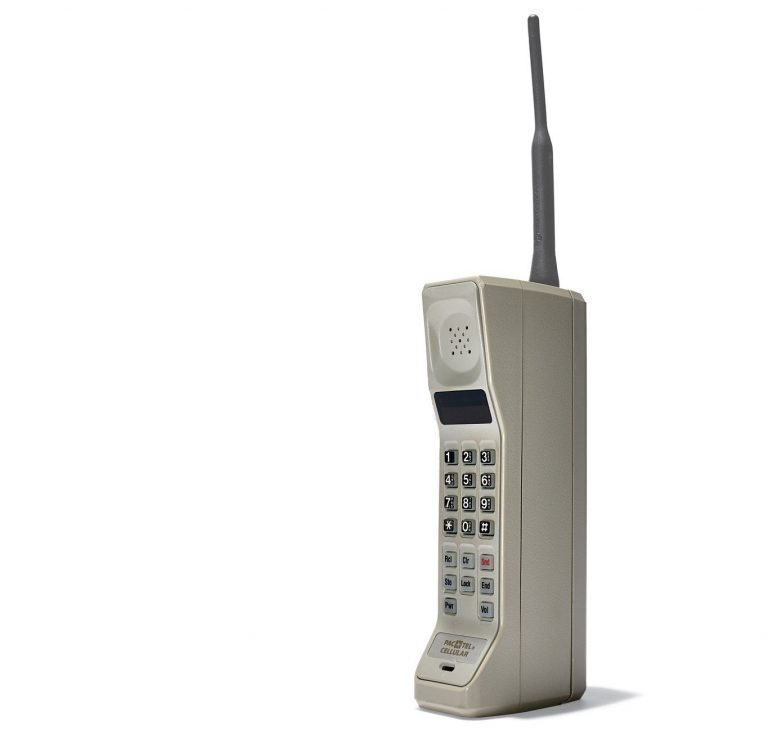
Motorola DynaTAC 8000S: A Revolutionary Pioneer of Mobile Phones
Motorola DynaTAC 8000S
The mobile phone industry began with a simple idea: make it possible for people to communicate without being connected to a fixed telephone.
Today, that idea has evolved into smartphones that can browse the internet, take high-resolution photographs, stream movies, navigate cities, run thousands of applications, and connect people across the world.
In the 1980s, however, mobile phones were very different.
They were large, heavy and expensive devices designed primarily for making telephone calls.
One of the early phones that helped shape this new era was the Motorola DynaTAC 8000S.
The DynaTAC 8000S belonged to Motorola’s pioneering family of handheld cellular phones. It followed the famous DynaTAC 8000X and represented an early step toward making handheld cellular communication a more practical commercial product.
It still had the unmistakable appearance of an early “brick phone,” but it demonstrated that Motorola was already working on improving and expanding its revolutionary handheld-phone technology.
The Beginning of the DynaTAC 8000S
The story of the DynaTAC 8000S begins with Motorola’s effort to create a telephone that could be carried by an individual.
In 1973, Motorola demonstrated a working handheld cellular telephone in New York City. Martin Cooper, one of Motorola’s key engineers in the project, made the historic first public handheld cellular-phone call.
That demonstration proved that cellular communication did not have to be restricted to cars or fixed locations.
However, turning the prototype into a commercially available product required many years of engineering and development.
The result was the Motorola DynaTAC 8000X, which became commercially available in 1984.
Motorola did not stop there.
The company continued developing the DynaTAC family, looking for ways to improve the design and eventually make mobile phones more accessible.
The DynaTAC 8000S appeared during this early period of development, around the middle of the 1980s.
It was closely related to the 8000X but was positioned as a more affordable version.
The difference may seem small today, but at the time, even a modest reduction in price could make an enormous difference in the potential market for a mobile phone.
Motorola DynaTAC 8000S
The DynaTAC 8000S was still unmistakably a first-generation mobile phone.
It was designed primarily for voice calls and had none of the features that people now associate with smartphones.
There was no internet.
There were no downloadable applications.
There was no camera.
There was no GPS.
There was no touchscreen.
There was no Wi-Fi.
The phone’s job was straightforward: make and receive telephone calls through a cellular network.
Yet that simplicity was part of what made the device important.
The telephone was no longer permanently attached to a building, a desk or a vehicle.
It could be carried by the user.
That was the fundamental change taking place during this period.
Motorola DynaTAC 8000S Specifications
| Specification | Motorola DynaTAC 8000S |
|---|---|
| Manufacturer | Motorola |
| Model | DynaTAC 8000S |
| Introduction | Approximately 1985–1986 |
| Network generation | 1G |
| Network technology | Analog cellular |
| Network standards | AMPS / TACS / ETACS versions |
| Weight | Approximately 820 g |
| Display | Basic numeric LED display |
| Talk time | Approximately 30 minutes |
| Recharge time | Up to approximately 10 hours |
| Keypad | Physical buttons |
| Camera | No |
| Internet | No |
| GPS | No |
| Form factor | Handheld / brick-style |
| Era | 1980s |
Exact specifications could differ between versions produced for different markets. Early cellular networks were not standardized globally in the way modern mobile networks are, so Motorola produced different versions of its phones for different regions.
Design and Appearance
The DynaTAC 8000S had the classic appearance that people now associate with an old-fashioned mobile phone.
Its body was large and rectangular, with a long external antenna and a physical keypad.
It was not designed to fit discreetly into a pocket.
The electronics and battery technology of the period required considerably more space than the components inside a modern smartphone.
The phone also had a basic numeric display rather than the large color touchscreen found on today’s devices.
The design was focused almost entirely on telephone functions.
Users could enter numbers, make calls and manage basic phone operations through physical buttons.
There was no graphical interface and no collection of apps competing for the user’s attention.
For its time, however, the design represented something remarkable.
A person could carry a complete cellular telephone in their hand.
Battery and Talk Time
Battery technology was one of the major challenges facing early handheld phones.
The DynaTAC 8000S could provide roughly 30 minutes of talk time, while recharging the battery could take several hours and in some cases around 10 hours.
This meant that using the phone required considerably more planning than using a modern smartphone.
A short conversation could consume a significant portion of the available battery.
There was also a major trade-off between portability and battery capacity.
The more battery a manufacturer added, the heavier the phone became.
The technology of the 1980s simply could not provide the combination of tiny size, enormous battery capacity and powerful electronics that consumers expect today.
Nevertheless, the ability to make a mobile call at all was a much bigger achievement than battery life.
How Much Did the DynaTAC 8000S Cost?
The DynaTAC 8000S was introduced during a period when mobile phones were still considered luxury technology.
The 8000S was intended to cost less than the original DynaTAC 8000X, but it was still far beyond what most people would consider an ordinary everyday purchase.
Early mobile phones were primarily attractive to business users, professionals and wealthy customers who could justify paying a premium for the freedom of mobile communication.
The high price was caused by several factors.
The technology was new.
Cellular networks were still being developed.
The phones required specialized components.
And the market was still very small compared with the enormous global mobile-phone industry that would develop later.
Over time, competition and technological improvements would bring prices down dramatically.
The DynaTAC 8000S belonged to the period before that transformation had taken place.
What Network Did the DynaTAC 8000S Use?
The DynaTAC 8000S was a 1G analog cellular phone.
First-generation cellular networks were primarily designed for voice communication.
They were fundamentally different from the digital networks used by modern mobile phones.
Depending on the particular regional version, DynaTAC 8000S phones could operate on different analog cellular systems, including AMPS, TACS and ETACS.
This regional variation was common during the early development of cellular telecommunications.
Different countries and regions used different technical standards, so mobile phones often needed to be manufactured specifically for particular networks.
The DynaTAC 8000S therefore belongs firmly to the first generation of cellular technology.
The DynaTAC 8000S and the 8000X
The DynaTAC 8000S was closely connected to the DynaTAC 8000X.
The 8000X had already established Motorola’s handheld cellular phone concept commercially.
The 8000S took that basic idea and developed it further.
One of the main differences was its positioning as a lower-cost model.
The phones also had differences in their control layout, with the 8000S having a simpler arrangement of buttons.
These changes might appear insignificant compared with modern smartphone upgrades, but they were part of an important process.
Motorola was learning how to turn an extraordinary technological achievement into a developing product category.
The company would continue refining the DynaTAC concept through the rest of the 1980s.
Why the DynaTAC 8000S Was Important
The DynaTAC 8000S was not the phone that invented the handheld mobile phone.
That distinction belongs to the earlier DynaTAC development and ultimately to the DynaTAC 8000X as the first commercially available handheld cellular phone.
Its importance lies elsewhere.
The 8000S was part of the process of transforming handheld cellular technology from a groundbreaking demonstration into an expanding commercial industry.
It showed that Motorola was already thinking beyond a single revolutionary product.
The company was developing different models and versions for different customers and markets.
This approach would eventually become central to the mobile-phone industry.
As manufacturers competed, phones became smaller, lighter, cheaper and easier to use.
The DynaTAC 8000S was one of the early steps along that road.
From the DynaTAC 8000S to the Modern Smartphone
It is difficult to imagine how limited the DynaTAC 8000S was compared with a modern smartphone.
The 8000S was essentially a portable cellular telephone.
A modern smartphone is effectively a miniature computer that also happens to make telephone calls.
Today’s phones can provide:
- High-speed internet
- Digital photography
- Video recording
- GPS navigation
- Wi-Fi
- Bluetooth
- Mobile applications
- Video calls
- Streaming services
- Gaming
- Digital payments
- Social media
- Artificial intelligence
The physical transformation is equally impressive.
A DynaTAC 8000S could weigh around 820 grams.
Many modern smartphones weigh less than 250 grams.
The early phone needed a large body to accommodate its electronics, battery and antenna.
Modern semiconductor technology has allowed vastly more powerful components to fit inside a much smaller device.
The DynaTAC 8000S had one main job.
Modern smartphones have hundreds of potential uses.
Yet the fundamental idea remains unchanged:
communication should not depend on being physically connected to a telephone.
DynaTAC 8000S vs Modern Smartphones
| Feature | DynaTAC 8000S | Modern Smartphone |
|---|---|---|
| Primary purpose | Voice calls | Communication and computing |
| Network | 1G analog | 4G / 5G |
| Display | Basic numeric display | Large touchscreen |
| Camera | No | Yes |
| Internet | No | Yes |
| Apps | No | Yes |
| GPS | No | Yes |
| Wi-Fi | No | Yes |
| Bluetooth | No | Yes |
| Weight | Approximately 820 g | Often under 250 g |
| Talk time | Approximately 30 minutes | Several hours |
| Charging | Several hours | Often much faster |
| Form factor | Large brick | Slim smartphone |
The comparison highlights how much mobile technology changed in only a few decades.
Interesting Facts About the DynaTAC 8000S
1. It belonged to Motorola’s early DynaTAC family
The 8000S was part of the same pioneering family that began with Motorola’s famous DynaTAC handheld-phone project.
2. It followed the DynaTAC 8000X
The 8000S appeared after the commercial introduction of the 8000X and represented another stage in Motorola’s early mobile-phone development.
3. It was intended to be more affordable
The 8000S was positioned below the 8000X in price, although early cellular phones remained extremely expensive.
4. It was a 1G phone
The DynaTAC 8000S operated on first-generation analog cellular technology.
5. Different versions were produced
Because cellular standards differed between countries, versions of the phone were designed for different networks and markets.
6. It weighed around 820 grams
That is several times heavier than many modern smartphones.
7. Its battery technology was primitive by modern standards
Around 30 minutes of talk time was possible, while recharging could take many hours.
8. It had no mobile data
The phone existed before mobile internet and modern smartphone data services.
Frequently Asked Questions
What is the Motorola DynaTAC 8000S?
The Motorola DynaTAC 8000S is an early handheld cellular phone from Motorola’s pioneering DynaTAC family. It followed the DynaTAC 8000X and was developed as a more affordable version of Motorola’s early handheld cellular technology.
When was the Motorola DynaTAC 8000S released?
The DynaTAC 8000S appeared around the middle of the 1980s, generally dated to approximately 1985–1986 depending on the specific market and version.
Was the DynaTAC 8000S the first mobile phone?
No. The DynaTAC 8000S was not the first commercially available handheld mobile phone. That distinction belongs to the DynaTAC 8000X. The 8000S was an early follow-up model.
How heavy was the DynaTAC 8000S?
A DynaTAC 8000S weighed approximately 820 grams, although specifications could vary between versions.
How long did the DynaTAC 8000S battery last?
The phone could provide approximately 30 minutes of talk time, with recharging requiring several hours and potentially around 10 hours.
Did the DynaTAC 8000S have a camera?
No. Cameras were not part of early mobile phones. The DynaTAC 8000S was designed for voice communication.
Did the DynaTAC 8000S have internet access?
No. The phone used first-generation analog cellular technology and did not provide mobile internet access.
What network did the DynaTAC 8000S use?
Different versions were designed for different first-generation analog cellular networks, including AMPS, TACS and ETACS.
Was the DynaTAC 8000S cheaper than the 8000X?
Yes. The 8000S was developed as a less expensive alternative to the earlier 8000X, although it was still an expensive product for its time.
The Legacy of the Motorola DynaTAC 8000S
The Motorola DynaTAC 8000S represents an important period in the early development of mobile phones.
The DynaTAC 8000X had demonstrated that handheld cellular communication could become a commercial reality.
The 8000S showed the next step: developing that technology into a broader range of products.
This process would eventually transform mobile phones from expensive business equipment into everyday consumer electronics.
Motorola would continue shrinking its phones and improving their capabilities.
The enormous DynaTAC design would eventually lead to smaller families such as the MicroTAC, followed later by models such as the StarTAC.
Each generation brought improvements in size, weight, usability and functionality.
The DynaTAC 8000S therefore sits near the beginning of a remarkable technological journey.
It was still a large brick-shaped telephone, but the industry was already moving toward something very different.
Conclusion
The Motorola DynaTAC 8000S was one of the early mobile phones that helped establish the commercial development of handheld cellular communication.
It followed the groundbreaking DynaTAC 8000X and attempted to make Motorola’s pioneering technology somewhat more accessible.
By modern standards, the phone was enormous.
It weighed around 820 grams, offered only about 30 minutes of talk time and could take many hours to recharge.
Its capabilities were extremely limited.
There was no internet, camera, GPS, touchscreen, Wi-Fi or mobile applications.
But those limitations should be viewed in the context of its time.
The DynaTAC 8000S was part of a new technological era in which a telephone could finally travel with its owner.
That simple concept would eventually change the way billions of people communicate.
From the large DynaTAC phones of the 1980s to today’s powerful smartphones, the technology has changed almost beyond recognition.
The journey, however, began with phones like the DynaTAC 8000S.