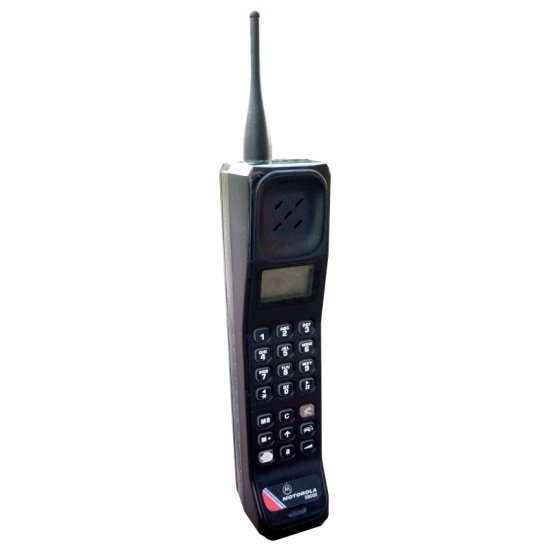
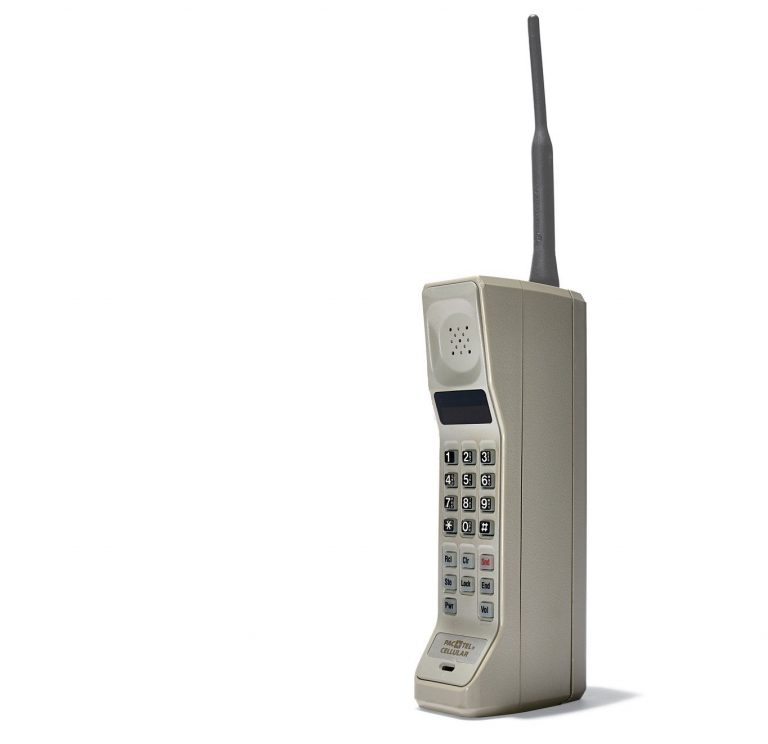
Motorola DynaTAC 888: The Legendary Final Chapter of the Brick Phone
Motorola DynaTAC 888
The Motorola DynaTAC 888 was one of the final chapters in the long history of Motorola’s iconic brick-style mobile phones.
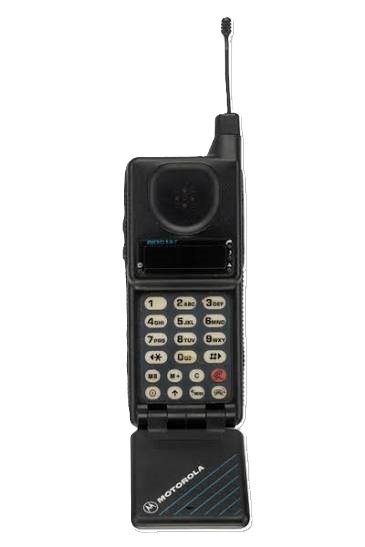
By the time the DynaTAC 888 appeared in the mid-1990s, mobile phones had already changed dramatically. Devices were becoming smaller, lighter and more sophisticated, while new designs such as Motorola’s MicroTAC were beginning to replace the traditional brick format.
Yet Motorola continued producing DynaTAC models.
The 888 represented the mature form of the classic DynaTAC design. It retained the large rectangular body, physical keypad and external antenna that had defined the series, while benefiting from years of improvements in mobile-phone engineering.
It was also closely associated with the British market and is remembered as one of the last DynaTAC brick phones sold in the UK.
For collectors today, the DynaTAC 888 is particularly interesting because it represents the end of an era.
The first DynaTAC had introduced handheld cellular communication to the commercial world.
The 888 showed what that same basic concept looked like near the end of the analog brick-phone era.
The History of the Motorola DynaTAC 888
The story of the DynaTAC 888 begins more than two decades earlier.
In 1973, Motorola publicly demonstrated a working portable cellular telephone system in New York City.
That demonstration was the beginning of a remarkable technological journey.
Motorola continued developing the technology for more than a decade before the Federal Communications Commission approved the DynaTAC 8000X in September 1983.
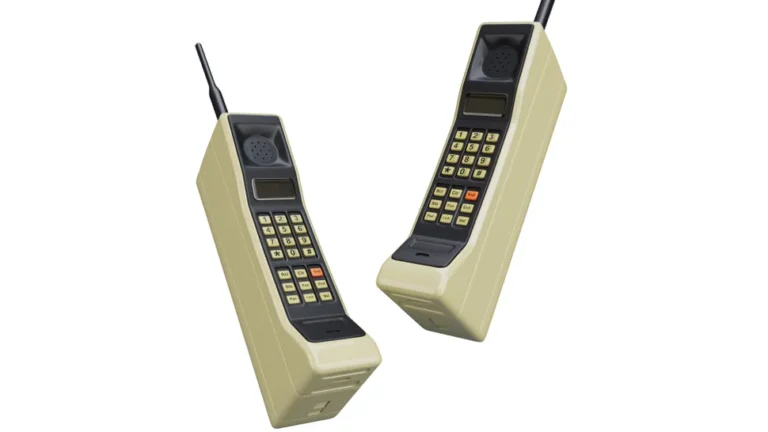
The 8000X became the world’s first commercial handheld cellular phone.
From there, Motorola continued improving the DynaTAC family.
The 8000S followed.
Then came models such as the 8500X, 8800X and 8900X.
Each generation gradually improved the size, weight, battery performance and usability of the original concept.
The DynaTAC 888 arrived near the end of this evolution.
Historical UK phone records place the model around 1994–1995 and describe it as the last of the classic DynaTAC brick phones sold in Britain.
By then, the mobile-phone market was changing rapidly.
Smaller designs were becoming increasingly attractive, and Motorola itself was already producing the MicroTAC family.
The 888 therefore represented both continuity and an ending.
It was still a DynaTAC, but the age of the traditional brick phone was coming to an end.
Motorola DynaTAC 888 Overview
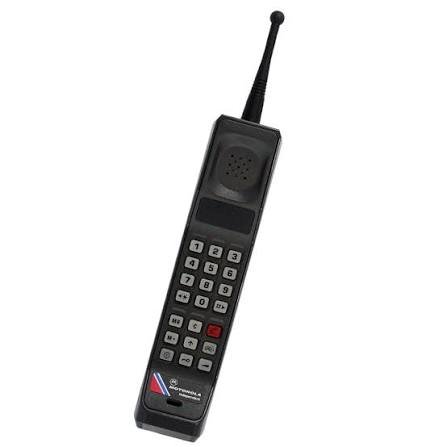
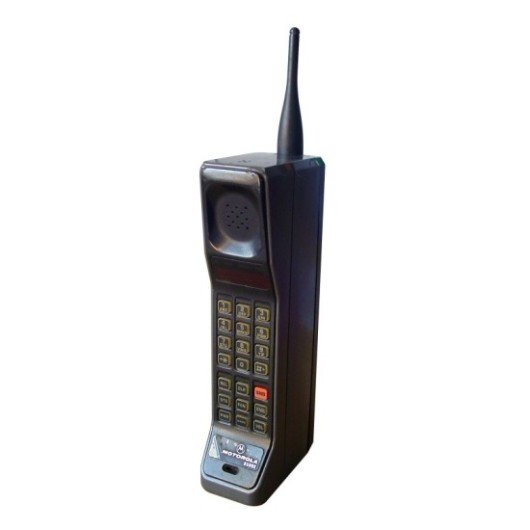
The DynaTAC 888 maintained the classic appearance that had made Motorola’s early cellular phones famous.
It featured a large rectangular body, physical buttons, an external antenna and a removable battery.
But compared with the original DynaTAC 8000X, the difference was enormous.
The original 8000X weighed approximately 794 grams.
By the time Motorola reached the later DynaTAC generation, the company had dramatically reduced the size and weight of its phones.
The DynaTAC 888 was designed as a practical late-generation brick phone rather than a groundbreaking first-generation device.
Its purpose was straightforward:
Make cellular calls reliably while remaining portable.
It included useful features such as memory functions, call controls, volume adjustment and keypad functions that had become standard on advanced analog mobile phones.
Motorola DynaTAC 888 Specifications
| Specification | Motorola DynaTAC 888 |
|---|---|
| Manufacturer | Motorola |
| Model | DynaTAC 888 |
| Era | Approximately 1994–1995 |
| Network | 1G analog cellular |
| Market | Particularly associated with the UK |
| Design | Classic brick-style |
| Display | LED |
| Input | Physical keypad |
| Antenna | External |
| Battery | Removable rechargeable battery |
| Main purpose | Voice calls |
| Technology | Analog cellular |
| Position in DynaTAC family | One of the final classic brick models |
Exact specifications could vary by regional version and network configuration, which was common with DynaTAC models of this period.
Design and Appearance
The DynaTAC 888 looked very different from the smartphones we use today.
It was thick, tall and rectangular.
There was no touchscreen.
There was no glass front covering almost the entire device.
Instead, the front was dominated by a physical keypad and a small display.
The external antenna was another defining feature.
It extended from the top of the phone and helped create the unmistakable appearance associated with early mobile phones.
The large battery was also visible as part of the phone’s physical design.
Modern smartphone users are accustomed to batteries being permanently enclosed inside a slim body.
With the DynaTAC 888, the battery was an obvious component of the overall design.
This was a phone built during a period when practicality was more important than minimalism.
The 888 also benefited from the accumulated engineering experience of Motorola’s earlier DynaTAC models.
By this point, the company had spent years improving the ergonomics, electronics and reliability of the DynaTAC platform.
Battery and Talk Time
Battery technology remained an important limitation of analog mobile phones.
The DynaTAC 888 required a rechargeable battery that contributed significantly to the phone’s size and weight.
Unlike modern smartphones, there was no expectation that a mobile phone would power a large touchscreen, multiple cameras, GPS, Wi-Fi, Bluetooth and powerful applications.
The battery’s primary job was to keep the cellular radio and telephone operating.
This made battery technology much simpler in some ways, but the cellular hardware itself still required substantial power.
One advantage of the later DynaTAC generation was that battery and electronic technology had improved considerably compared with the earliest models.
The result was a phone that could be made considerably more practical than the original DynaTAC 8000X.
How Much Did the Motorola DynaTAC 888 Cost?
The cost of early DynaTAC phones had been one of their biggest obstacles.
When the original DynaTAC 8000X reached consumers, it famously cost around US$3,995.
That price made the phone a luxury product and helped give early mobile phones their reputation as executive technology.
By the time the DynaTAC 888 appeared, the mobile-phone market had changed.
Manufacturing technology had improved.
Competition had increased.
More cellular networks were available.
And mobile phones were becoming increasingly common.
As a result, late-generation DynaTAC phones were much more accessible than the first 8000X.
However, the total cost of ownership still included the cellular service itself.
Mobile calling remained considerably more expensive than many modern mobile plans.
For business users and tradespeople, however, the ability to make calls from almost anywhere could justify the expense.
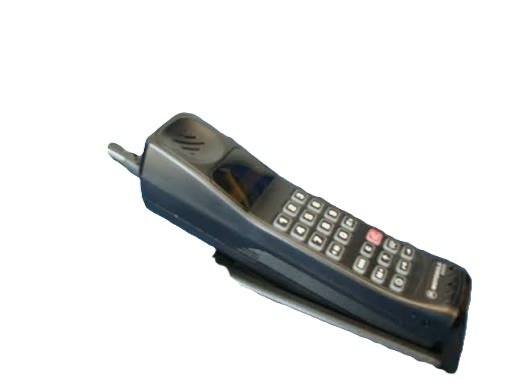
The First Mobile Phone Call
The DynaTAC 888 was not the phone that made the first famous handheld cellular call.
That achievement belongs to Motorola’s early DynaTAC prototype.
On April 3, 1973, Motorola demonstrated a portable cellular telephone in New York City.
That demonstration proved that a person could carry a telephone rather than remaining connected to a fixed telephone line.
The technology still required years of development before it could become commercially practical.
In 1983, the DynaTAC 8000X received regulatory approval and became the first commercially available handheld cellular phone.
More than a decade later, the DynaTAC 888 represented the mature end of that same product family.
The journey from the first prototype to the 888 demonstrates how dramatically cellular technology evolved in roughly twenty years.
Network Technology
The DynaTAC 888 belonged to the 1G generation of mobile communication.
That meant it used analog cellular technology rather than the digital networks found in today’s smartphones.
There was no 2G GSM internet experience.
There was no 3G.
There was no LTE.
There was no 5G.
The phone’s main purpose was voice communication.
This simplicity was both a limitation and a strength.
The phone did not need to support social media, streaming video, web browsing or thousands of applications.
Its job was simply to connect calls.
During the early days of mobile communication, achieving reliable wireless voice communication was itself an impressive technological achievement.
Why Was the DynaTAC 888 Revolutionary?
The DynaTAC 888 was not revolutionary because it introduced a completely new technology.
Its importance lies elsewhere.
It represented the maturity of the classic DynaTAC concept.
The first DynaTAC had been a huge technological breakthrough.
The 888 showed how far that original idea had progressed.
Over the years, Motorola had transformed the DynaTAC from an enormous and expensive device into a more practical mobile phone.
The 888 was therefore a symbol of technological refinement.
It also arrived at an important turning point.
Smaller phones were becoming more desirable.
Motorola’s MicroTAC family had already introduced a very different approach to mobile-phone design.
The brick phone was beginning to look old-fashioned.
Yet the DynaTAC 888 remained popular enough to continue the classic design into the mid-1990s.
That makes it an important historical bridge between two generations of mobile phones.
From the DynaTAC 888 to the Modern Smartphone
The DynaTAC 888 and a modern smartphone have almost nothing in common technologically.
The DynaTAC 888 was essentially a portable voice telephone.
Today’s smartphone is a powerful computer, camera, entertainment system and communication device.
Modern smartphones provide:
- 4G and 5G connectivity
- Touchscreens
- High-resolution cameras
- GPS
- Wi-Fi
- Bluetooth
- Mobile applications
- Internet browsing
- Video calls
- Social media
- Digital payments
- Artificial intelligence
- Cloud services
The DynaTAC 888 provided none of these capabilities.
Yet the fundamental idea remains the same.
The user carries a personal communication device wherever they go.
That idea was still relatively new when the first DynaTAC appeared.
DynaTAC 888 vs Modern Smartphone
| Feature | Motorola DynaTAC 888 | Modern Smartphone |
|---|---|---|
| Era | Mid-1990s | 2020s |
| Network | 1G analog | 4G/5G digital |
| Display | Small LED | Large touchscreen |
| Input | Physical keypad | Touchscreen |
| Internet | No | Yes |
| Camera | No | Yes |
| GPS | No | Yes |
| Apps | No | Yes |
| Wi-Fi | No | Yes |
| Bluetooth | No | Yes |
| Digital payments | No | Yes |
| Main purpose | Voice communication | Communication + computing |
| Antenna | External | Internal |
Interesting Facts About the Motorola DynaTAC 888
1. It Was One of the Last DynaTAC Brick Phones
The 888 is remembered as one of the final classic DynaTAC brick models sold in the British market.
2. It Arrived More Than a Decade After the 8000X
The original commercial DynaTAC appeared in 1983, while the 888 belongs to the mid-1990s generation.
That represents more than ten years of continuous development.
3. It Came Near the End of the Analog Era
By the time the 888 appeared, the mobile industry was moving toward smaller phones and increasingly advanced digital networks.
4. It Kept the Famous Brick Design Alive
While other Motorola phones were becoming smaller, the 888 retained the large rectangular DynaTAC appearance.
5. It Was Associated With the UK Market
The model is particularly documented in British mobile-phone histories.
6. The DynaTAC Name Had Already Become Iconic
By this stage, DynaTAC was no longer an experimental name.
It was strongly associated with Motorola’s pioneering role in handheld cellular communication.
7. It Was a Descendant of the World’s First Commercial Handheld Cell Phone
The DynaTAC 888 belonged to the same broad family that began with the 8000X.
8. It Appeared During the Rise of Smaller Phones
The MicroTAC and other compact designs were changing consumer expectations.
9. It Was Built for Calling
Unlike modern smartphones, its primary purpose remained straightforward: making and receiving cellular calls.
10. It Represents the End of an Era
The DynaTAC 888 is particularly interesting because it represents one of the final stages of the classic Motorola brick-phone design before smaller form factors became dominant.
Frequently Asked Questions
When was the Motorola DynaTAC 888 released?
Historical UK phone records place the DynaTAC 888 around 1994–1995, depending on the market and documentation.
Was the DynaTAC 888 a 1G phone?
Yes. It belonged to the analog 1G generation of cellular phones.
Was the Motorola DynaTAC 888 a smartphone?
No. It was a traditional cellular telephone designed primarily for voice communication.
Did the DynaTAC 888 have internet access?
No. Mobile internet was not available on this generation of analog DynaTAC phones.
Did it have a touchscreen?
No. It used a physical keypad.
Did the DynaTAC 888 have a camera?
No. Mobile-phone cameras became popular much later.
Why is the DynaTAC 888 important?
It represents one of the final stages of Motorola’s classic DynaTAC brick-phone family and shows how the original handheld-cellular concept evolved before smaller phones took over.
Was it smaller than the original DynaTAC?
Yes. Decades of engineering improvements made later DynaTAC phones dramatically smaller and lighter than the original 8000X.
What happened to the DynaTAC after the 888?
Motorola increasingly focused on newer designs such as the MicroTAC and later the StarTAC, which offered much smaller and more portable form factors.
Is the DynaTAC 888 collectible?
Yes. Its historical importance, distinctive appearance and position near the end of the DynaTAC brick-phone era make it interesting to vintage mobile-phone collectors.
The Legacy of the Motorola DynaTAC 888
The Motorola DynaTAC 888 represents something special in mobile-phone history.
It was not the beginning.
It was not the first commercial mobile phone.
It was not the first small Motorola phone.
Instead, it represents the end of one of the most recognizable designs in mobile-phone history.
The original DynaTAC 8000X changed the world by proving that a telephone could be carried in your hand.
The 8500X, 8800X and 8900X gradually refined the concept.
The 888 carried that design into the mid-1990s.
But technology was moving quickly.
Consumers increasingly wanted phones that were smaller and easier to carry.
Digital cellular networks were expanding.
New designs were appearing.
The MicroTAC had already demonstrated the appeal of compact flip-style phones.
The StarTAC would later take miniaturization even further.
The traditional brick phone was approaching the end of its life.
That is precisely what makes the DynaTAC 888 historically fascinating.
It is a reminder of the moment when one era of mobile communication was coming to an end while another was beginning.
Conclusion
The Motorola DynaTAC 888 was a legendary late-generation member of Motorola’s famous brick-phone family.
By the time it appeared in the mid-1990s, mobile phones had already evolved enormously from the original DynaTAC 8000X.
The technology had become smaller, more practical and more accessible.
Yet the 888 continued to use the classic design that had made DynaTAC famous.
Its importance is therefore not simply about specifications.
It represents a chapter in the history of mobile communication.
The DynaTAC journey began with an ambitious Motorola prototype in 1973.
It continued with the groundbreaking 8000X in the 1980s.
It evolved through numerous increasingly practical models.
And eventually, the classic brick design reached its final generation.
The DynaTAC 888 stands near that endpoint.
Today, smartphones are thinner, lighter and unimaginably more powerful.
But without the pioneering work behind phones like the DynaTAC, the modern mobile world would look very different.
The DynaTAC 888 may have been near the end of the brick-phone era, but its place in mobile-phone history remains remarkable.