Motorola DynaTAC 8000X: The First Wow Handheld Mobile Phone
The mobile phone has become one of the most important pieces of technology in modern life. Today, smartphones can connect to the internet, take professional-quality photographs, stream video, run applications, navigate cities, and perform tasks that once required an entire collection of separate devices.
But mobile phones did not begin this way.
The story of the modern handheld mobile phone began with a much larger and simpler device: the Motorola DynaTAC.
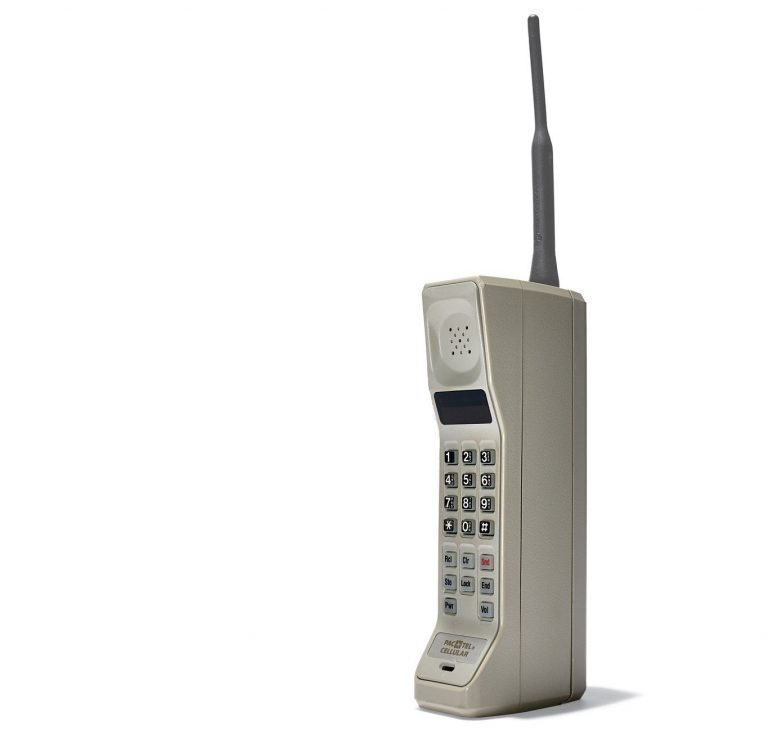
The Motorola DynaTAC 8000X is widely recognized as the world’s first commercially available handheld mobile phone. It was the result of more than a decade of research and development by Motorola and represented a major technological breakthrough in personal communication. Motorola received approval for the DynaTAC 8000X from the U.S. Federal Communications Commission on September 21, 1983, and the phone became available to consumers in 1984.
Long before smartphones became part of everyday life, the DynaTAC demonstrated that people could carry a cellular telephone with them and make calls without being connected to a traditional landline.
Motorola developed a working DynaTAC portable phone prototype by February 1973. You can learn more about the development of the technology in Motorola’s official history of the DynaTAC
The Beginning of the Handheld Mobile Phone
The history of mobile communication goes back much further than the DynaTAC.
Before handheld cellular phones existed, mobile telephone systems were generally associated with vehicles. Car phones allowed people to communicate while travelling, but the equipment was large and was not designed to be carried around like a modern mobile phone.
Motorola wanted to change that.
The company’s engineers worked on the idea of a truly portable cellular telephone. By February 1973, Motorola had produced a working DynaTAC prototype. On April 3, 1973, Motorola publicly demonstrated its portable cellular telephone system in New York City.
That demonstration became one of the defining moments in mobile-phone history.
Motorola engineer Martin Cooper made the famous first public handheld mobile-phone call using a DynaTAC prototype. The demonstration showed that a person could hold a cellular telephone in their hand and communicate through a cellular network without being connected to a car or fixed telephone line.
However, the 1973 device was a prototype rather than the mass-market phone that consumers could purchase.
That distinction is important.
The 1973 DynaTAC prototype represents the beginning of the handheld cellular-phone era, while the DynaTAC 8000X became the first commercially available handheld mobile phone.
Motorola DynaTAC 8000X
The DynaTAC 8000X was the commercial development of the technology demonstrated by Motorola in 1973.
Motorola spent more than ten years developing the technology and reportedly invested more than US$100 million in the project before the DynaTAC reached commercial reality.
The result was a phone that looked extremely different from the smartphones we know today.
It was large, heavy, expensive, and had very limited battery life by modern standards.
Yet at the time, these limitations were less important than what the phone made possible.
For the first time, consumers could own a genuinely portable cellular telephone.
Motorola DynaTAC 8000X Specifications
| Specification | Motorola DynaTAC 8000X |
|---|---|
| Manufacturer | Motorola |
| Model | DynaTAC 8000X |
| Announced | 1983 |
| Commercial availability | 1984 |
| Network technology | 1G / analog cellular |
| Cellular standard | AMPS |
| Weight | Approximately 790–794 g |
| Length | Approximately 30–33 cm |
| Talk time | Approximately 30 minutes |
| Recharge time | Approximately 10 hours |
| Display | Simple numeric display |
| Original price | Approximately US$3,995 |
| Form factor | Handheld / brick-style |
| Era | 1980s |
Specifications can vary slightly between historical sources and individual versions of the DynaTAC. Motorola lists the phone at 28 ounces (794 grams), while museum and historical collections report measurements around 790 grams.
Design and Appearance
The DynaTAC 8000X looked more like a portable radio than today’s smartphone.
Its large rectangular body earned it the famous nickname “brick phone.”
The phone was around 30 centimeters long and weighed roughly 0.8 kilograms. That made it enormous compared with modern smartphones, many of which weigh less than 250 grams.
It had a physical keypad for entering telephone numbers and a simple display rather than a touchscreen.
There was no app store.
There was no camera.
There was no web browser.
There was no GPS.
There was no social media.
The DynaTAC had one revolutionary purpose: allowing people to make cellular telephone calls while away from a fixed telephone.
And that alone was enough to change telecommunications.
Battery and Talk Time
Battery technology was one of the biggest limitations of early mobile phones.
The DynaTAC 8000X offered approximately 30 minutes of talk time on a full charge. Recharging the battery could take around 10 hours.
Compared with today’s phones, this sounds extremely limited.
Modern smartphones can often operate for an entire day or more, while fast-charging technology can restore a significant amount of battery capacity in a relatively short period.
The DynaTAC was very different.
Its battery technology had to power a relatively large analog cellular device, and portable computing was not its purpose. The phone was primarily a communication tool.
Nevertheless, being able to carry a telephone around with you was revolutionary.
How Much Did the DynaTAC 8000X Cost?
The DynaTAC 8000X was not an inexpensive consumer product.
Its original price was approximately US$3,995. Historical sources note that this was an exceptionally expensive device, placing it far outside the budget of most consumers.
The Smithsonian Institution describes the DynaTAC as a roughly two-and-a-half-pound, 13-inch handheld phone introduced in 1984 for about $4,000.
The high price meant that early cellular phones were largely associated with business executives and wealthy customers.
Mobile communication was initially a luxury rather than an everyday necessity.
Over the following decades, however, prices fell dramatically and mobile phones became accessible to hundreds of millions of people around the world.
The First Mobile Phone Call
One of the most famous moments in mobile-phone history happened on April 3, 1973.
Martin Cooper, a Motorola engineer and executive, used a DynaTAC prototype to make a public handheld cellular-phone call in New York City. Motorola identifies this event as the world’s first public demonstration of a working portable cellular phone and system.
The call demonstrated something that had previously seemed almost impossible:
A person could walk down a city street while carrying a telephone and communicate wirelessly through a cellular network.
The commercial DynaTAC 8000X came later, after years of engineering, testing, regulatory work, and development.
This is why the history of the DynaTAC should be understood as a process rather than a single event.
1973: Motorola demonstrates a working handheld cellular-phone prototype.
1983: The DynaTAC 8000X receives FCC approval.
1984: The DynaTAC becomes available to consumers.
Together, these milestones established the foundation for the mobile-phone industry.
What Network Did It Use?
The DynaTAC belonged to the first generation of cellular technology, commonly known as 1G.
Unlike today’s 4G and 5G networks, first-generation cellular networks were analog and primarily designed for voice communication.
The DynaTAC was developed for the Advanced Mobile Phone System, or AMPS, used in the United States.
There was no mobile internet and no high-speed data connection.
The concept of using a phone as a miniature computer was still decades away.
The DynaTAC’s achievement was much simpler: it made telephone communication portable.
Why the DynaTAC 8000X Was Revolutionary
It is easy to look at the DynaTAC today and wonder why such a large and limited device was important.
The answer is portability.
Before handheld cellular phones became available, making a telephone call generally meant finding a fixed telephone.
The DynaTAC changed the relationship between people and telephones.
The telephone no longer had to remain in one location.
Instead, the person could carry the telephone.
That fundamental change created an entirely new industry.
Over time, manufacturers competed to make phones smaller, lighter, cheaper, more powerful, and easier to use.
The DynaTAC started that journey.
From the DynaTAC to the Modern Smartphone
The transformation from the DynaTAC 8000X to today’s smartphones is extraordinary.
The DynaTAC was designed primarily for voice calls.
Modern smartphones combine:
- Telephone communication
- High-speed internet
- Cameras
- GPS navigation
- Bluetooth
- Wi-Fi
- Video recording
- Music and streaming
- Mobile applications
- Gaming
- Artificial intelligence
- Digital payments
- Social media
- Video calls
The physical transformation is just as dramatic.
The DynaTAC weighed roughly 790–794 grams.
A modern smartphone can weigh less than one-third of that while providing dramatically more computing power.
The DynaTAC offered around 30 minutes of talk time, while modern smartphones can remain powered for many hours.
Yet today’s smartphones would not exist in their current form without the fundamental concept demonstrated by early cellular phones.
DynaTAC 8000X vs Modern Smartphones
| Feature | DynaTAC 8000X | Modern Smartphone |
|---|---|---|
| Primary purpose | Voice calls | Communication and computing |
| Network | 1G analog | 4G / 5G |
| Display | Basic numeric display | Large touchscreen |
| Camera | No | Yes |
| Internet | No | Yes |
| Apps | No | Yes |
| GPS | No | Yes |
| Wi-Fi | No | Yes |
| Bluetooth | No | Yes |
| Weight | About 790–794 g | Often under 250 g |
| Talk time | About 30 minutes | Several hours |
| Charging | About 10 hours | Often under 2 hours |
| Original price | About $3,995 | Wide range |
The comparison shows how dramatically mobile technology has evolved.
Interesting Facts About the DynaTAC 8000X
1. It was known as the “brick phone”
Because of its size and shape, the DynaTAC became associated with the nickname “brick.”
2. It took years to develop
Motorola’s handheld cellular-phone project involved more than a decade of research and development before commercial availability.
3. It was extremely expensive
The original price was approximately $3,995, making it a luxury product when it entered the market.
4. It was very heavy
At roughly 790–794 grams, it weighed several times more than many modern smartphones.
5. Battery life was extremely limited
The phone offered approximately 30 minutes of talk time and required around 10 hours to recharge.
6. It changed the meaning of a telephone
The most important feature wasn’t its display, battery, or design.
It was the ability to carry the telephone with you.
Frequently Asked Questions
What was the first mobile phone?
The Motorola DynaTAC prototype was publicly demonstrated in 1973 and is widely recognized as the first handheld cellular-phone system. The Motorola DynaTAC 8000X became the first commercially available handheld mobile phone.
Who invented the first handheld mobile phone?
Motorola engineer Martin Cooper is widely associated with the invention and development of the first handheld cellular phone, working with a larger Motorola engineering team. Motorola’s historical records identify Cooper as a key figure in the DynaTAC project.
When was the first mobile phone call made?
The first public handheld cellular-phone call was made on April 3, 1973, in New York City using a Motorola DynaTAC prototype.
When was the Motorola DynaTAC 8000X released?
The DynaTAC 8000X received FCC approval on September 21, 1983 and became available to consumers in 1984.
How much did the DynaTAC 8000X cost?
The phone cost approximately US$3,995 when it entered the consumer market.
How heavy was the first mobile phone?
The DynaTAC 8000X weighed approximately 790–794 grams, depending on the source and version.
How long could the DynaTAC battery last?
The DynaTAC provided approximately 30 minutes of talk time on a charge. Recharging could take around 10 hours.
Did the first mobile phone have internet?
No. The DynaTAC was designed primarily for cellular voice communication. Mobile internet, smartphone applications, and modern data services came much later.
The Legacy of the Motorola DynaTAC 8000X
The Motorola DynaTAC 8000X was not powerful by today’s standards.
It did not have a camera, touchscreen, internet connection, GPS, social media, streaming services, or artificial intelligence.
But judging it by modern smartphone standards misses the point.
The DynaTAC solved a completely different problem.
It took the telephone away from the wall and put it into the hands of the individual.
That simple idea helped create one of the world’s largest technology industries.
From the enormous DynaTAC of the 1980s to today’s thin smartphones, foldable devices, satellite-connected phones, and AI-powered mobile computers, the basic idea remains the same: communication should be available wherever you are.
The DynaTAC 8000X was one of the devices that made that vision a reality.
Conclusion
The Motorola DynaTAC 8000X occupies a special place in mobile-phone history.
The story began with Motorola’s handheld cellular prototype and the historic 1973 demonstration by Martin Cooper. A decade of engineering and investment followed, eventually leading to FCC approval of the DynaTAC 8000X in 1983 and its arrival for consumers in 1984.
It was large, heavy, expensive, and limited compared with even the simplest smartphone today.
But it achieved something extraordinary.
It made the telephone portable.
That achievement helped begin the journey from the first handheld cellular phone to the smartphones we carry every day.
For anyone interested in the history of mobile technology, the Motorola DynaTAC 8000X is where the story of the modern handheld mobile phone truly begins.