Motorola MicroTAC 9800X: The Revolutionary Phone That Changed Mobile Design
Motorola MicroTAC 9800X
The Motorola MicroTAC 9800X was one of the most important mobile phones of the late 1980s.
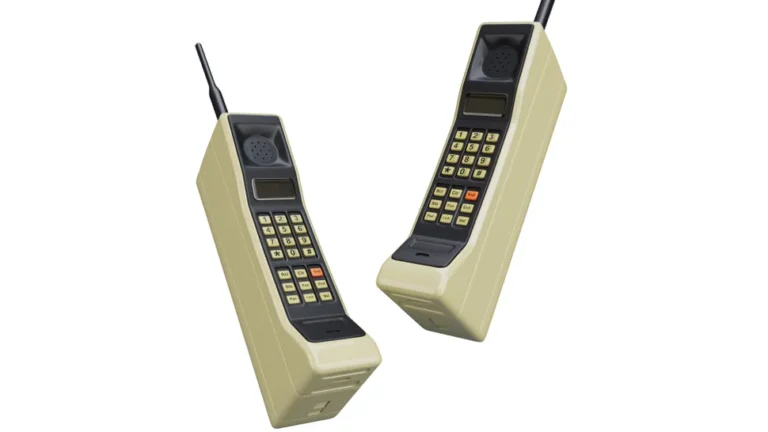
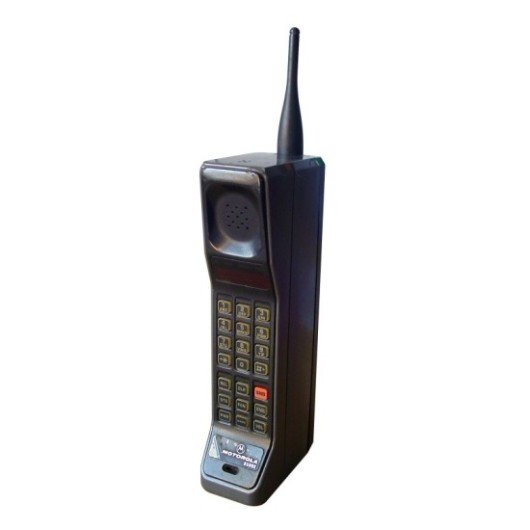
Released in 1989, it marked a dramatic change from the large brick-style phones that had dominated Motorola’s earlier DynaTAC range.
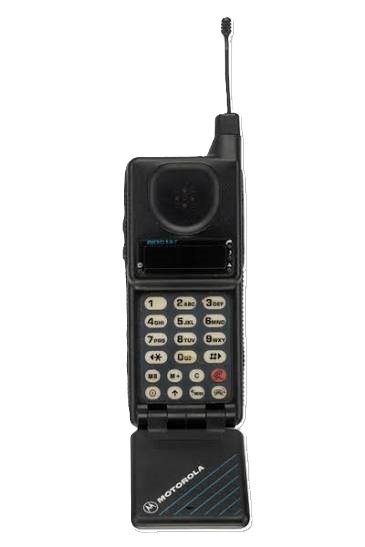
Instead of carrying a huge rectangular phone, users could now carry a much smaller device with a folding section that covered the keypad.
The design was revolutionary.
The MicroTAC 9800X was promoted as a pocket cellular telephone, and its compact design was intended to make mobile communication much more personal and portable.
It was also one of the earliest major examples of what would become the flip-phone design.
The phone was still expensive and technically limited compared with today’s smartphones, but its design pointed directly toward the future.
For Motorola, the MicroTAC represented a new direction.
The era of the giant mobile-phone brick was beginning to give way to smaller, more stylish and more portable handsets.
The History of the Motorola MicroTAC 9800X
Motorola’s early mobile-phone history was dominated by the DynaTAC family.
The original DynaTAC 8000X had become famous as the first commercial handheld cellular phone, but it was large, heavy and expensive.
As technology improved, Motorola began looking for ways to make mobile phones dramatically smaller.
The result was the MicroTAC 9800X.
It was introduced in April 1989 and was presented as Motorola’s pocket-sized cellular telephone. At launch, it was described as a new category of personal cellular communication.
The change was immediately noticeable.
Instead of a traditional brick-shaped body, the MicroTAC used a folding mouthpiece that covered the keypad when the phone was closed.
This made the device considerably more compact when carried.
The design also had a practical purpose.
When the phone was opened, the microphone was positioned closer to the user’s mouth, making the handset more comfortable to use.
This combination of portability and ergonomics helped make the MicroTAC one of Motorola’s most influential designs.
Motorola MicroTAC 9800X Overview
The MicroTAC 9800X was designed to be dramatically smaller than the mobile phones that came before it.
The phone featured a black housing, a physical keypad and a distinctive folding section.
Its original display was an eight-character red dot-matrix LED display, which could provide more information than the simpler displays used on many earlier mobile phones.
Another important feature was its built-in alphanumeric phone book.
Users could store telephone numbers together with names, making the MicroTAC more useful as a personal communication device.
The phone also offered a menu system with a range of functions, including memory management, volume controls, call features and other operating options.
Motorola MicroTAC 9800X Specifications
| Specification | Motorola MicroTAC 9800X |
|---|---|
| Manufacturer | Motorola |
| Model | MicroTAC 9800X |
| Launch | 1989 |
| Network | 1G analog cellular |
| Network versions | AMPS, ETACS, NMT and JTACS |
| Form factor | Flip |
| Display | 8-character red dot-matrix LED |
| Weight | Approximately 270–350 g depending on battery/version |
| Keypad | Physical numeric keypad |
| Phone book | Alphanumeric |
| Antenna | External-looking pull-up antenna |
| Main functions | Calls, memory, phone book, menu functions and volume control |
| Battery | Rechargeable |
| Main innovation | Compact flip-style design |
The exact weight varied according to the battery fitted. The Mobile Phone Museum lists a 270-gram version, while contemporary documentation also records versions around 305–350 grams depending on battery configuration.
Design and Appearance
The design of the MicroTAC 9800X was perhaps its greatest achievement.
Previous Motorola DynaTAC phones had been recognizable as large rectangular bricks.
The MicroTAC looked completely different.
A hinged section folded over the keypad when the phone was closed.
When opened, that section extended toward the user’s mouth.
This created a more natural shape for making calls and protected the keypad when the phone was not being used.
The design also made the phone much easier to carry.
Motorola intended the MicroTAC to fit into a shirt pocket, something that would have been difficult with the original DynaTAC models.
The phone’s black body and metallic Motorola branding gave it a distinctly premium appearance.
The red dot-matrix LED display was positioned above the keypad and could display up to eight characters.
The physical controls included standard telephone keys as well as dedicated buttons for functions such as:
- Power
- Send
- End
- Clear
- Store
- Recall
- Menu
- Name
- Function
There were also buttons on the side for adjusting volume.
For 1989, this was an impressive combination of design and functionality.
Battery and Talk Time
The MicroTAC 9800X represented a major improvement in portability, but battery technology still imposed limitations.
Different battery options were available.
A slim battery could reduce the phone’s weight significantly, while larger battery packs offered longer operating time.
Contemporary technical documentation describes approximately 30 minutes of continuous talk time with a slim battery, increasing to around 75 minutes with a standard battery.
This was a substantial improvement over the earliest DynaTAC phones.
However, the larger battery increased the weight of the phone.
This created a trade-off that would remain important in mobile-phone design for many years:
smaller phone versus longer battery life.
Modern smartphone users rarely think about battery size in quite the same way because today’s batteries and electronics are vastly more advanced.
In 1989, however, every gram mattered.
How Much Did the Motorola MicroTAC 9800X Cost?
The MicroTAC 9800X was far from cheap.
The phone originally sold in the United States for approximately $2,995, although prices varied by market and configuration.
That made it a luxury product.
Even though the MicroTAC was dramatically smaller than earlier mobile phones, cellular communication was still expensive.
Customers had to purchase the handset and pay for cellular service.
The high price also helped establish the MicroTAC as a status symbol.
Owning one demonstrated that you had access to one of the newest forms of personal technology.
The combination of compact size, futuristic appearance and high price made the MicroTAC especially attractive to business users and wealthy consumers.
The First Mobile Phone Call
The MicroTAC 9800X was not the phone used to make the first handheld cellular call.
That historic achievement came much earlier.
On April 3, 1973, Motorola publicly demonstrated a portable cellular telephone in New York City.
The demonstration showed that a person could carry a telephone and communicate without being connected to a traditional fixed telephone line.
Motorola then spent years developing the technology before the DynaTAC 8000X became commercially available.
The MicroTAC came later, but it represented another major milestone.
The challenge was no longer proving that handheld cellular communication worked.
The challenge was making the phone smaller, lighter and more convenient.
The MicroTAC 9800X succeeded remarkably well at that task.
Network Technology
The original MicroTAC 9800X belonged to the 1G analog cellular era.
Different versions were produced for different cellular systems, including AMPS, ETACS, NMT and JTACS.
This was an important period because cellular networks were expanding internationally, but countries did not all use the same technical standards.
The phone therefore existed in multiple regional configurations.
The MicroTAC was primarily designed for voice communication.
There was no mobile internet.
There was no SMS messaging as we know it today.
There were no smartphone applications.
Its greatest achievement was simply making cellular communication portable in a much more practical form.
Why Was the MicroTAC 9800X Revolutionary?
The MicroTAC 9800X was revolutionary because it changed the physical concept of a mobile phone.
Before the MicroTAC, many early cellular phones looked like oversized bricks.
The MicroTAC introduced a folding design that was significantly more compact.
This was more than a cosmetic change.
The folding section protected the keypad.
It helped position the microphone closer to the user’s mouth.
And it reduced the phone’s overall footprint when carried.
The MicroTAC effectively demonstrated that a mobile phone did not have to remain a large rectangular block.
This design philosophy would influence Motorola for years.
Later MicroTAC models continued refining the concept, while the company’s famous StarTAC eventually took the folding-phone idea even further.
From the MicroTAC 9800X to the Modern Smartphone
The MicroTAC 9800X and today’s smartphones may look completely unrelated, but there is an important connection between them.
The MicroTAC helped establish a design principle that remains important today:
A mobile phone should be designed around the person carrying it.
The original DynaTAC was essentially a portable telephone.
The MicroTAC began making portability itself a central part of the design.
Today’s smartphones take this idea much further.
Modern phones are:
- Slim
- Lightweight
- Touchscreen-based
- Internet-connected
- Camera-equipped
- GPS-enabled
- App-capable
- Multimedia devices
The MicroTAC had none of those capabilities.
But its emphasis on compact personal communication helped push mobile-phone design toward the devices people carry everywhere today.
MicroTAC 9800X vs Modern Smartphone
| Feature | Motorola MicroTAC 9800X | Modern Smartphone |
|---|---|---|
| Era | 1989 | 2020s |
| Network | 1G analog | 4G/5G digital |
| Display | 8-character red LED | Large touchscreen |
| Input | Physical keypad | Touchscreen |
| Form factor | Flip | Slim slab |
| Internet | No | Yes |
| Camera | No | Yes |
| GPS | No | Yes |
| Apps | No | Yes |
| Video | No | Yes |
| Digital payments | No | Yes |
| Main purpose | Voice calls | Communication + computing |
| Weight | About 270–350 g depending on battery | Usually 150–250 g |
Interesting Facts About the Motorola MicroTAC 9800X
1. It Was Released in 1989
The MicroTAC 9800X entered the market in April 1989.
2. It Was Designed to Fit in a Shirt Pocket
Motorola marketed the device as a pocket cellular telephone and designed it to be significantly more portable than earlier mobile phones.
3. It Introduced a New Phone Shape
The MicroTAC’s folding design became one of the defining characteristics of Motorola mobile phones during the 1990s.
4. It Was Extremely Light for Its Time
Versions with slim batteries weighed around 270–305 grams, with heavier batteries increasing the total weight.
5. It Had a Dot-Matrix LED Display
Its eight-character red dot-matrix display was considerably more informative than many earlier simple numeric displays.
6. It Had an Alphanumeric Phone Book
Users could store names together with telephone numbers, making it more useful as a personal communication device.
7. It Cost Thousands of Dollars
The original US price was approximately $2,995, making it a premium product.
8. It Was Not Actually as Small as Modern Phones
Although revolutionary for 1989, the MicroTAC could still measure more than nine inches long when fully opened.
9. Its Antenna Was Partly for Appearance
The phone had an external-looking pull-up antenna even though the actual antenna arrangement was more sophisticated. Historical accounts note that Motorola believed consumers expected mobile phones to have visible antennas.
10. It Became the Foundation for Later MicroTAC Phones
Motorola continued developing the MicroTAC concept for many years, eventually producing numerous versions with improved displays, batteries, networks and features.
Frequently Asked Questions
When was the Motorola MicroTAC 9800X released?
The MicroTAC 9800X was introduced in 1989, with historical sources placing its launch in April.
How much did the MicroTAC 9800X weigh?
Depending on the battery configuration, early versions weighed roughly 270 to 350 grams.
How much did the MicroTAC 9800X cost?
The phone originally sold for approximately $2,995 in the United States, although pricing varied by market and configuration.
Did the MicroTAC 9800X have a touchscreen?
No. It used a physical keypad.
Did the MicroTAC 9800X have internet access?
No. It was an analog cellular phone designed primarily for voice calls.
Did it have a camera?
No. Mobile-phone cameras became common many years later.
Was the MicroTAC 9800X a flip phone?
It used a pioneering folding design in which the mouthpiece section folded over the keypad. This became an important predecessor to the flip and clamshell phones that followed.
What network did the MicroTAC 9800X use?
Different versions supported analog cellular systems including AMPS, ETACS, NMT and JTACS.
Why is the MicroTAC 9800X important?
It dramatically changed mobile-phone design by introducing a much smaller and more portable folding form factor.
Is the MicroTAC 9800X collectible?
Yes. Original MicroTAC 9800X phones are highly interesting to collectors because of their historical significance and distinctive design.
The Legacy of the Motorola MicroTAC 9800X
The MicroTAC 9800X changed the direction of Motorola’s mobile-phone design.
The DynaTAC had made handheld cellular communication famous.
The MicroTAC made it more personal.
Instead of thinking only about how to make a telephone work away from a fixed line, Motorola was now thinking about how the phone should fit around the user.
That change was extremely important.
The folding design became one of the company’s defining ideas throughout the 1990s.
Motorola produced numerous MicroTAC models with improvements in weight, displays, batteries and network technology.
Eventually, the StarTAC would take the folding concept to another level.
But the MicroTAC 9800X was where the modern Motorola flip-phone story truly began.
Its influence can be seen in generations of folding mobile phones that followed.
Conclusion
The Motorola MicroTAC 9800X was a revolutionary mobile phone that changed how people thought about portable communication.
Released in 1989, it broke away from the large brick-style design of earlier DynaTAC phones.
Its folding mouthpiece, compact body and dramatically reduced weight made it one of the most innovative mobile phones of its time.
The phone was still expensive.
Its battery life was limited.
Its display was tiny.
It had no internet, camera or touchscreen.
But none of that diminishes its importance.
The MicroTAC 9800X introduced a new philosophy:
A mobile phone should be small enough and personal enough to carry with you everywhere.
That philosophy would eventually lead to smaller flip phones, clamshell designs and ultimately the smartphones that billions of people carry today.
The DynaTAC made mobile phones possible.
The MicroTAC made them personal.
And that is why the Motorola MicroTAC 9800X deserves a special place in mobile-phone history.