Motorola DynaTAC 8900X-2: The Remarkable Evolution of the Classic Mobile Phone
Motorola DynaTAC 8900X-2
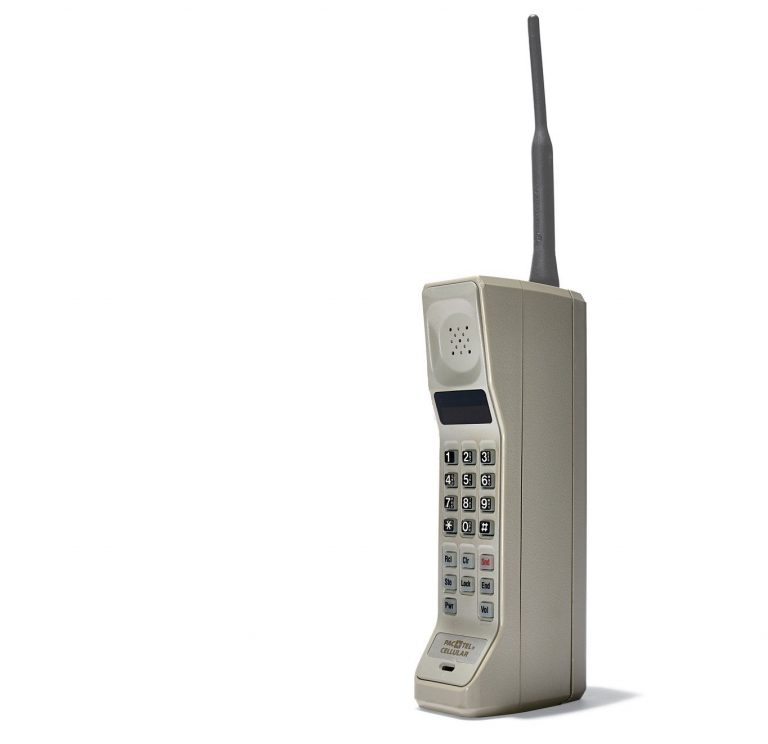
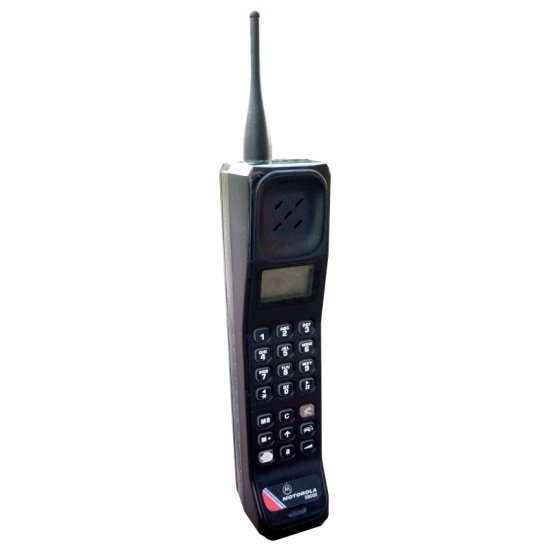
The Motorola DynaTAC 8900X-2 was one of the most refined versions of Motorola’s famous DynaTAC brick-phone design.
Arriving during the early evolution of mobile communication, the 8900X-2 demonstrated just how much early cellular phones had changed since the enormous DynaTAC 8000X appeared in the 1980s.
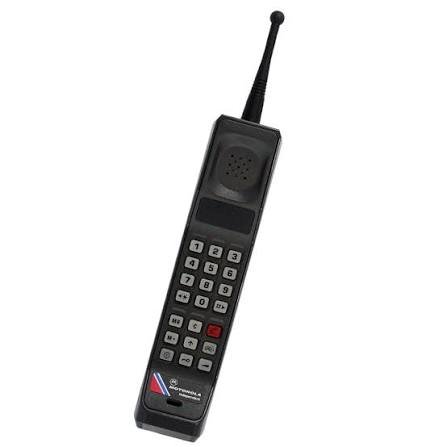
While the original DynaTAC became famous for making handheld cellular communication possible, later models focused on making the technology smaller, lighter and easier to use.
The 8900X-2 was a perfect example of that progression.
At approximately 520 grams, it was considerably lighter than the earliest DynaTAC models. It also featured a redesigned keypad, contact memory, speed redial and improved battery performance.
For modern smartphone users, the phone may look primitive.
But in its era, the DynaTAC 8900X-2 represented a remarkable achievement in portable communication.
The History of the Motorola DynaTAC 8900X-2
Motorola’s DynaTAC story began with an ambitious idea: creating a telephone that people could carry with them.
The company publicly demonstrated a working portable cellular system and phone in New York City on April 3, 1973.
After years of engineering and investment, Motorola received approval for the DynaTAC 8000X in 1983, creating the world’s first commercial handheld cellular phone.
The DynaTAC family then evolved rapidly.
The 8000X was followed by models such as the 8000S and 8500X. Motorola subsequently developed slimmer versions as electronic components became smaller.
The DynaTAC 8900X-2 belongs to this later generation.
It was announced in 1989 and was designed for the European market, where it supported the ETACS analog cellular system. It was closely related to Motorola’s Ultra Classic sold in the United States.
This was an important period in mobile-phone history.
Phones were becoming smaller and more practical, while cellular networks were expanding into more countries.
Motorola DynaTAC 8900X-2 Overview
The DynaTAC 8900X-2 maintained the familiar Motorola brick-phone shape while making several improvements over previous generations.
One of its most noticeable advantages was its weight.
At approximately 520 grams, it was dramatically lighter than the original DynaTAC 8000X.
The phone also introduced a redesigned keypad.
Instead of relying mainly on letter-labelled function keys, the 8900X-2 used symbols to identify many of its additional functions.
These included buttons for calling, ending calls, volume adjustment, power, memory and other features.
The phone could store up to 20 telephone numbers and associated names and also offered speed redial functionality.
Motorola DynaTAC 8900X-2 Specifications
| Specification | Motorola DynaTAC 8900X-2 |
|---|---|
| Manufacturer | Motorola |
| Model | DynaTAC 8900X-2 |
| Announced | 1989 |
| Network | 1G analog cellular |
| Network standard | ETACS |
| Weight | Approximately 520 g |
| Dimensions | Approximately 200 × 60 × 40 mm |
| Length including antenna | Approximately 270 mm |
| Display | LED |
| Keypad | 12-key numeric keypad + function keys |
| Contact memory | Up to 20 numbers and names |
| Talk time | Approximately 1 hour |
| Standby time | Approximately 13 hours |
| Antenna | External |
| Main functions | Calls, memory, speed redial, volume, keypad lock and power control |
Specifications can vary between regional versions, but historical museum and telecommunications records document the 8900X-2 at around 520 grams with approximately one hour of talk time and 13 hours of standby time.
Design and Appearance
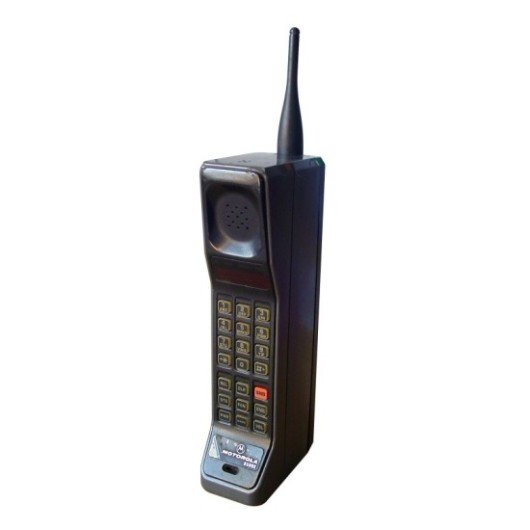
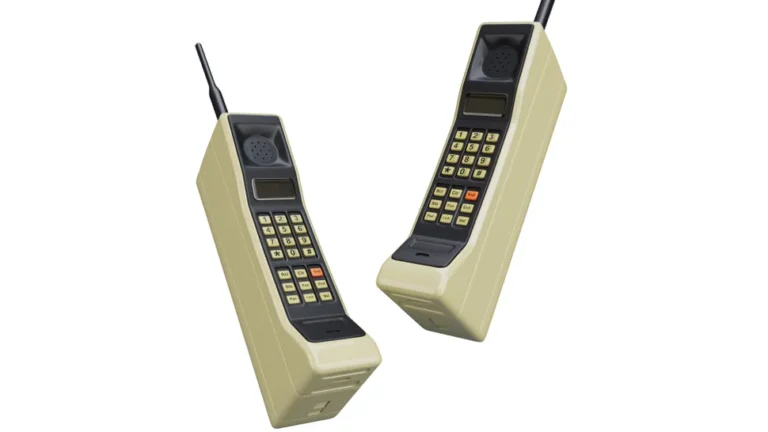
The DynaTAC 8900X-2 still looked unmistakably like a classic Motorola brick phone.
It had a tall rectangular body, a physical keypad, an external antenna and a large battery.
But compared with earlier DynaTAC models, the design was noticeably slimmer and lighter.
This was one of the most important developments in early mobile-phone design.
The original DynaTAC 8000X weighed roughly 2.5 pounds, or around 1.1 kilograms.
The 8900X-2, at approximately 520 grams, was less than half that weight.
That difference illustrates how quickly mobile-phone engineering was progressing.
The keypad was another interesting part of the design.
The phone had the standard 12-key telephone layout, supplemented by nine function keys.
Rather than using three-letter labels like some earlier DynaTAC models, these keys used recognizable symbols.
There was also a dedicated keypad-lock button.
For a mobile phone of the period, this was a useful feature because accidentally pressing buttons inside a pocket could result in unwanted actions.
Battery and Talk Time
Battery performance was one of the areas where the 8900X-2 showed considerable progress.
The phone offered approximately one hour of talk time and around 13 hours of standby time.
That was a significant improvement compared with the roughly 30-minute talk time associated with the earliest DynaTAC generation.
However, battery technology was still far from what we expect today.
The phone required a substantial battery and charging was part of the normal experience of owning a mobile phone.
There were no ultra-fast charging systems, wireless charging pads or compact lithium-ion batteries.
Nevertheless, achieving around an hour of talk time from a portable cellular phone was an important technological step.
How Much Did the Motorola DynaTAC 8900X-2 Cost?
Early cellular phones were expensive compared with ordinary household telephones.
The original DynaTAC 8000X famously launched at approximately US$4,000, placing it firmly in the luxury category.
By the time the 8900X-2 appeared, Motorola had made substantial progress in reducing the size and cost of cellular technology.
The 8900X-2 was therefore part of a broader transition.
Mobile phones were gradually moving away from being purely executive or luxury products and toward becoming devices that a larger number of consumers could eventually afford.
However, owning a mobile phone was still a considerable expense.
The phone itself was only part of the cost.
Users also had to pay for cellular service, which could be expensive because mobile networks were still relatively new.
The First Mobile Phone Call
The 8900X-2 was not the phone used for Motorola’s famous first public demonstration.
That historic event took place on April 3, 1973, when Motorola demonstrated a working portable cellular system in New York City.
The demonstration proved that cellular communication could move beyond fixed telephone lines.
More than a decade later, Motorola’s DynaTAC 8000X became the first commercially available handheld cellular phone.
The 8900X-2 was part of the next stage of that story.
By its arrival, the basic concept of handheld cellular communication had already been proven.
The challenge had become making phones:
- Smaller
- Lighter
- Easier to use
- More reliable
- More affordable
- More practical
The 8900X-2 addressed several of these challenges.
Network Technology
The Motorola DynaTAC 8900X-2 was an analog 1G mobile phone.
Its European version supported the ETACS, or Extended Total Access Communication System, cellular standard.
ETACS was an evolution of the earlier TACS cellular technology used in the United Kingdom and other markets.
This meant that the 8900X-2 was designed for a very different cellular environment from today’s smartphones.
There was no 4G.
There was no 5G.
There was no mobile internet.
The network was primarily intended for voice communication.
The phone’s purpose was simple:
Make and receive telephone calls while away from a fixed telephone.
That simple capability was still revolutionary.
Why Was the DynaTAC 8900X-2 Revolutionary?
The DynaTAC 8900X-2 was revolutionary because it showed how far handheld cellular technology had progressed in only a few years.
Compare the original DynaTAC with the 8900X-2.
The first generation was extremely heavy and offered limited talk time.
The 8900X-2 was much lighter and could provide approximately twice the talk time.
It also had useful memory and speed-redial features.
These improvements changed how people could use a mobile phone.
It was no longer simply an impressive technological demonstration.
It was becoming a practical communication tool.
The development of smaller and lighter phones would eventually lead to the compact mobile phones that became widespread during the 1990s.
From the DynaTAC 8900X-2 to the Modern Smartphone
The 8900X-2 and today’s smartphone could hardly be more different.
The Motorola phone was designed primarily for voice calls.
Modern smartphones combine telephone technology with the capabilities of a small computer.
Today’s phones can provide:
- High-speed internet
- Touchscreens
- Cameras
- GPS navigation
- Video calls
- Social media
- Mobile applications
- Music and video streaming
- Digital payments
- Cloud storage
- Artificial intelligence
The 8900X-2 had none of these technologies.
It had a physical keypad and a simple display.
Yet the fundamental concept was the same:
Communication should be available wherever you go.
That idea remains at the heart of modern mobile technology.
DynaTAC 8900X-2 vs Modern Smartphone
| Feature | Motorola DynaTAC 8900X-2 | Modern Smartphone |
|---|---|---|
| Era | Late 1980s/early 1990s | 2020s |
| Network | 1G analog | 4G/5G digital |
| Network standard | ETACS | LTE/5G |
| Weight | About 520 g | Usually 150–250 g |
| Display | Simple LED | High-resolution touchscreen |
| Input | Physical buttons | Touchscreen |
| Contact memory | About 20 numbers/names | Thousands |
| Camera | No | Yes |
| Internet | No | Yes |
| GPS | No | Yes |
| Apps | No | Yes |
| Mobile payments | No | Yes |
| Main purpose | Voice calls | Communication + computing |
Interesting Facts About the Motorola DynaTAC 8900X-2
1. It Was Much Lighter Than the Original DynaTAC
The 8900X-2 weighed about 520 grams, compared with roughly 1.1 kilograms for the original DynaTAC 8000X.
2. It Was Associated With the Ultra Classic
The European 8900X-2 was closely related to Motorola’s Ultra Classic sold in the United States.
3. It Supported ETACS
The European model was designed for the ETACS analog cellular network.
4. It Could Store 20 Contacts
Its address book could hold up to 20 telephone numbers and names.
5. It Had Speed Redial
The phone included a speed-redial function, making frequently used numbers easier to call.
6. It Had a Keypad Lock
A dedicated key-lock function helped prevent accidental button presses.
7. It Used Symbols for Function Keys
The function buttons were identified with symbols rather than the three-letter codes used on some earlier Motorola DynaTAC models.
8. It Could Provide Around One Hour of Talk Time
For its generation, approximately one hour of talk time represented a significant improvement over the earliest DynaTAC phones.
9. It Was Still an Analog Phone
Despite its improved design, the 8900X-2 remained part of the 1G analog era.
10. It Shows How Quickly Mobile Phones Were Shrinking
The move from the enormous original DynaTAC to the 520-gram 8900X-2 demonstrates the rapid miniaturization of mobile technology.
Frequently Asked Questions
When was the Motorola DynaTAC 8900X-2 released?
The DynaTAC 8900X-2 is documented as being announced in 1989.
How much did the Motorola DynaTAC 8900X-2 weigh?
It weighed approximately 520 grams.
How long could the DynaTAC 8900X-2 talk?
The phone offered approximately one hour of talk time.
How long was its standby time?
The documented standby time was approximately 13 hours.
How many contacts could it store?
The phone could store up to 20 telephone numbers and associated names.
What network did the DynaTAC 8900X-2 use?
The European version supported ETACS, an analog 1G cellular standard.
Did it have internet access?
No. The phone was designed for voice communication rather than internet access.
Did the DynaTAC 8900X-2 have a camera?
No. Mobile phone cameras became common many years later.
Was it a smartphone?
No. It was a traditional analog cellular telephone.
Why is the DynaTAC 8900X-2 historically important?
It demonstrates the rapid improvement of early mobile phones, particularly the reduction in weight and improvements in battery life, memory and usability.
The Legacy of the Motorola DynaTAC 8900X-2
The DynaTAC 8900X-2 is an excellent example of the transition taking place in mobile communication around the end of the 1980s.
The earliest DynaTAC phones had proved that handheld cellular communication was possible.
The 8900X-2 showed that the technology could become significantly smaller and more practical.
At only around 520 grams, it was less than half the weight of the original DynaTAC 8000X.
Its approximately one-hour talk time was also a major improvement.
And features such as contact memory, speed redial and keypad locking made the device more convenient.
The mobile-phone industry would soon experience even bigger changes.
Digital networks would replace analog systems.
SMS would become popular.
Phones would become dramatically smaller.
Then mobile internet, cameras and applications would transform the industry once again.
The 8900X-2 belongs to the important period immediately before that transformation.
Conclusion
The Motorola DynaTAC 8900X-2 was a remarkable evolution of the classic Motorola mobile phone.
It retained the famous brick-style design but made important improvements in size, weight, battery performance and usability.
At approximately 520 grams, it was dramatically lighter than the original DynaTAC 8000X.
Its ability to store contacts and provide speed redial also showed that mobile phones were beginning to become more than simple voice devices.
They were becoming personal communication tools.
The 8900X-2 still belonged to the analog 1G era, and by modern standards its capabilities were extremely limited.
There was no touchscreen, camera, internet or app store.
But those limitations should not overshadow its importance.
The phone represents a crucial stage in the long journey from the first handheld cellular telephone to today’s smartphone.
Every modern smartphone owes something to the generations of mobile phones that came before it.
The DynaTAC 8900X-2 is one of those important steps in that remarkable journey.