Motorola DynaTAC 8500X: A Groundbreaking Chapter in Mobile History
Motorola DynaTAC 8500X
The Motorola DynaTAC 8500X was one of the most recognizable mobile phones of the 1980s. Introduced in 1987, it represented another important step in the development of handheld cellular communication.
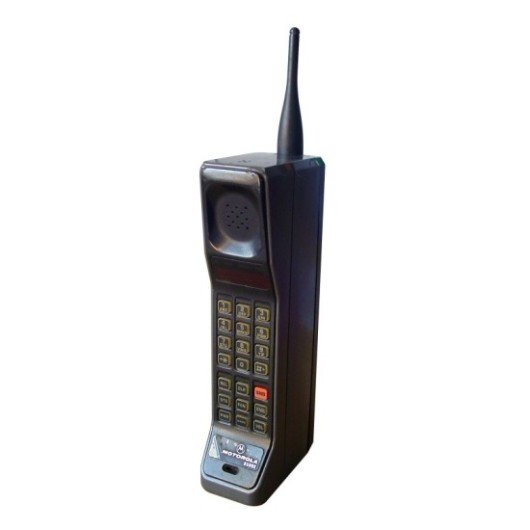
At a time when mobile phones were still large, expensive and uncommon, the Motorola DynaTAC 8500X brought improved functionality to the famous Motorola “brick phone” design. It offered a larger LED display, telephone-number memory, additional functions and a more refined design than earlier DynaTAC models.
Although it looks enormous compared with today’s smartphones, the Motorola DynaTAC 8500X was an impressive piece of technology for its era. It demonstrated how quickly mobile phones were evolving during the 1980s.
The DynaTAC family itself had already changed telecommunications. Motorola’s earlier DynaTAC 8000X received approval from the U.S. Federal Communications Commission in 1983 and became the world’s first commercial handheld cellular phone.
The 8500X continued that pioneering journey.
The History of the Motorola DynaTAC 8500X
The story of the Motorola DynaTAC 8500X begins with Motorola’s ambitious work on portable cellular communication.
In 1973, Motorola publicly demonstrated a working portable cellular telephone in New York City. More than a decade of research and development eventually led to the commercial DynaTAC 8000X.
The DynaTAC range continued to develop throughout the 1980s. Motorola introduced the DynaTAC 8500X in 1987, giving customers a more advanced version of the classic DynaTAC design.
The 8500X was particularly popular in Europe and became one of the better-known brick-style mobile phones of the decade.
Unlike the original DynaTAC 8000X, which was primarily remembered for simply making handheld cellular communication possible, the 8500X began to feel more like a practical communication device.
It could store telephone numbers and names, provide additional call functions and display useful information about the cellular connection.
Motorola DynaTAC 8500X Overview
The Motorola DynaTAC 8500X was still unmistakably a DynaTAC.
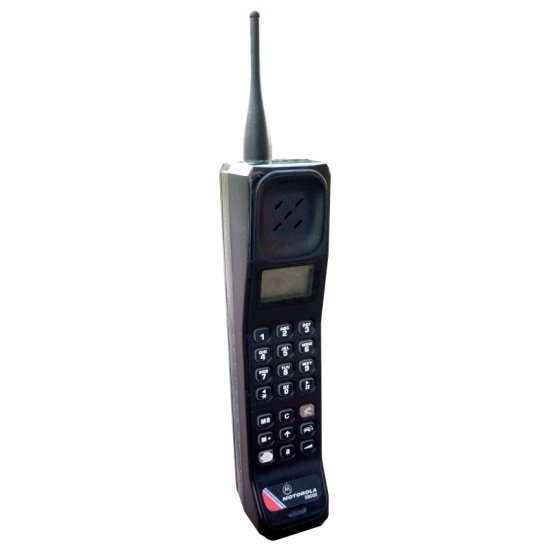
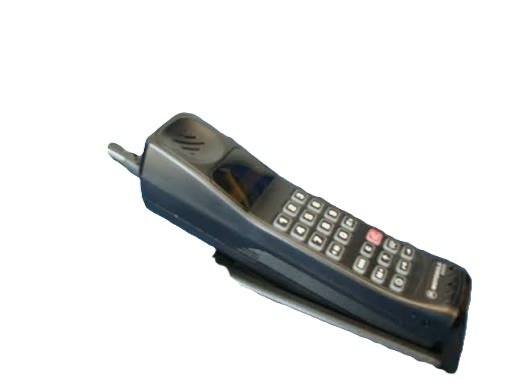
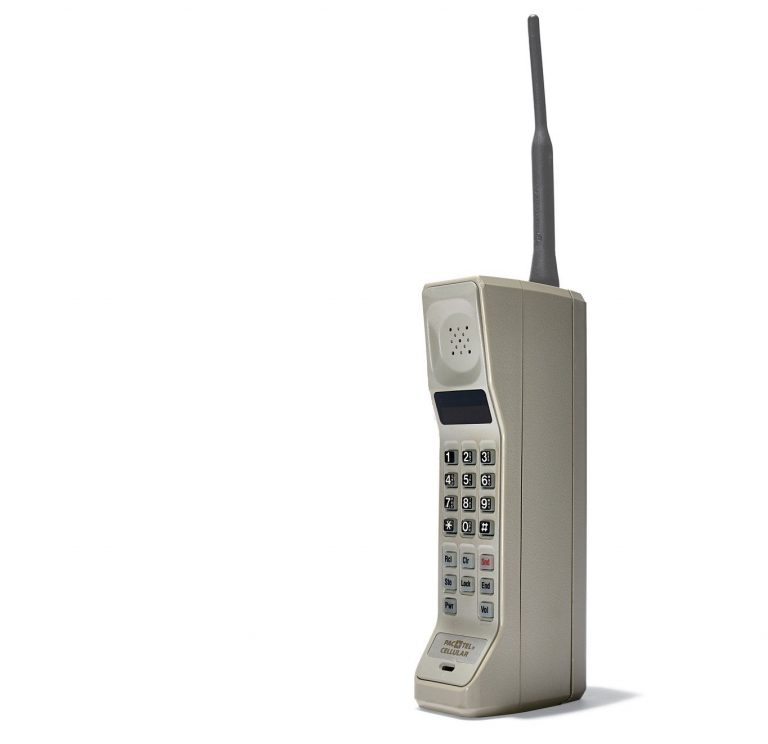
It had the characteristic tall rectangular body, large battery at the bottom, external antenna and keypad positioned below the display.
However, Motorola improved several areas of the design.
The phone used a larger red LED display capable of showing up to seven digits. It also included indicators such as In Use, No Svc and Roam, giving users more information about the phone’s status.
One of the biggest improvements was memory.
The phone could store up to 99 telephone numbers and associated names, something that would have seemed remarkably advanced compared with earlier mobile phones.
Motorola DynaTAC 8500X Specifications
| Specification | Motorola DynaTAC 8500X |
|---|---|
| Manufacturer | Motorola |
| Model | DynaTAC 8500X |
| Year | 1987 |
| Network | 1G analog cellular |
| Display | Red LED |
| Display capacity | Up to 7 digits |
| Phone memory | Up to 99 numbers and names |
| Weight | Approximately 730 g |
| Battery | Rechargeable battery |
| Talk time | Approximately 30 minutes |
| Charging time | Around 10 hours |
| Antenna | External |
| Keypad | Numeric keypad with function keys |
| Main functions | Calling, memory, timers, volume control and network indicators |
Specifications can vary between regional versions of historical DynaTAC phones, but the 8500X is generally documented as a 1987 model weighing around 730 grams.
Design and Appearance
The Motorola DynaTAC 8500X followed the classic “brick phone” design that became strongly associated with early mobile phones.
It was tall, thick and relatively heavy compared with modern phones.
The body was designed around functionality rather than portability in the modern sense. There was no attempt to make the device disappear inside a pocket. Instead, the phone was a visible technological statement.
The keypad contained the standard telephone numbers as well as additional function buttons.
These included functions for:
- Recalling stored numbers
- Clearing digits
- Starting calls
- Storing numbers
- Ending calls
- Adjusting volume
- Accessing additional functions
- Storing and recalling names
The phone’s larger red LED display was another improvement over earlier DynaTAC models.
It could show up to seven digits and provided status information through indicators such as In Use, No Svc and Roam.
The design was unmistakably from the 1980s, but it established a visual language that would influence mobile phones for years.
Battery and Talk Time
Battery technology was one of the biggest limitations of early mobile phones.
The DynaTAC 8500X was not designed for days of continuous use like a modern smartphone.
It offered roughly 30 minutes of talk time, while charging could take around 10 hours.
By modern standards, this seems extremely limited.
However, the technology available in the 1980s made portable cellular communication much more demanding than it is today.
Users also had to carry a phone that weighed hundreds of grams, making battery capacity and size a major engineering challenge.
The limited battery life meant that owners had to think carefully about when to use their phones.
A mobile phone was still primarily an emergency and business communication device rather than an entertainment machine.
How Much Did the Motorola DynaTAC 8500X Cost?
Early mobile phones were luxury products.
The original DynaTAC 8000X famously launched at around US$3,995, an enormous amount of money at the time.
The 8500X arrived during the period when mobile phones were gradually becoming more practical and accessible, but it was still far from being an inexpensive consumer device.
For many people in the 1980s, owning a DynaTAC was a symbol of wealth, business success and technological sophistication.
It was not unusual for early mobile phones to be associated with executives, wealthy professionals and celebrities.
The First Mobile Phone Call
The DynaTAC family has a special place in telecommunications history because Motorola demonstrated the first public handheld cellular call in New York City on April 3, 1973.
Motorola engineer Martin Cooper made the historic call using a DynaTAC prototype. Motorola later spent more than a decade developing the technology required to turn the concept into a commercially available product.
The DynaTAC 8500X arrived years later, but it was part of the same technological family.
It represented the continuing evolution of the idea that began with that pioneering demonstration.
Network Technology
The Motorola DynaTAC 8500X belonged to the first generation of cellular technology, commonly called 1G.
Unlike modern phones, it did not use digital cellular networks.
Voice communication was transmitted using analog cellular technology.
Different versions of DynaTAC phones were produced for different markets and cellular systems. This was important because cellular networks were developing differently across countries during the 1980s.
The phone’s network indicators were particularly useful because cellular coverage was still developing.
The No Svc indicator could tell the user that the phone was outside network service, while Roam indicated that the device was attempting to connect through another available network.
Today, smartphones automatically manage complex network connections involving 4G and 5G technology.
In the 1980s, simply maintaining a cellular connection was already an impressive achievement.
Why Was the DynaTAC 8500X Revolutionary?
The DynaTAC 8500X was revolutionary because it demonstrated how quickly mobile phones were moving beyond the basic concept of simply making calls.
Earlier mobile phones were mainly communication tools.
The 8500X began adding features that made the phone more useful as an everyday device.
Its ability to store up to 99 telephone numbers and names was particularly significant.
Instead of writing numbers in a notebook every time, users could keep important contacts inside the phone.
The device also included call timers, volume control and additional functions.
These features may seem basic today, but they helped establish the idea that a mobile phone could contain useful personal information and tools.
That concept would eventually become central to the modern smartphone.
From the DynaTAC 8500X to the Modern Smartphone
The difference between the DynaTAC 8500X and a modern smartphone is enormous.
The 8500X was primarily designed for voice communication.
Today’s smartphones combine:
- Cellular communication
- Internet access
- Cameras
- GPS
- Video recording
- Music
- Social media
- Messaging
- Mobile applications
- Digital payments
- Web browsing
- Artificial intelligence
A modern smartphone can contain more computing power than many computers from the 1980s.
The DynaTAC 8500X could not take photographs, browse the internet or send messages.
But it helped establish an important idea: communication could travel with you.
That idea became the foundation for the mobile technology revolution that followed.
DynaTAC 8500X vs Modern Smartphone
| Feature | Motorola DynaTAC 8500X | Modern Smartphone |
|---|---|---|
| Era | 1980s | 2020s |
| Network | 1G analog | 4G/5G digital |
| Display | Red LED | High-resolution touchscreen |
| Weight | About 730 g | Usually around 150–250 g |
| Main purpose | Voice calls | Communication, computing and entertainment |
| Contact storage | Up to 99 numbers/names | Thousands of contacts |
| Camera | No | Yes |
| Internet | No | Yes |
| GPS | No | Yes |
| Apps | No | Yes |
| Battery | Around 30 minutes talk time | Many hours of active use |
| Touchscreen | No | Yes |
| Mobile payments | No | Yes |
Interesting Facts About the Motorola DynaTAC 8500X
1. It Was Introduced in 1987
The DynaTAC 8500X was introduced in 1987, placing it firmly in the golden era of 1980s mobile technology.
2. It Could Store 99 Numbers
For its time, storing up to 99 telephone numbers and names was a useful feature and one of the phone’s major improvements over earlier DynaTAC models.
3. It Had a Red LED Display
The phone used red LED technology rather than the LCD touchscreen displays we associate with mobile phones today.
4. It Displayed Network Information
The phone could indicate whether a call was active, whether the device was outside network coverage and whether it was attempting to roam.
5. It Was Much Lighter Than the Original DynaTAC 8000X
The DynaTAC 8500X is documented at around 730 grams, while Motorola’s original commercial DynaTAC was about 794 grams.
6. The DynaTAC Name Had a Meaning
DynaTAC came from Dynamic Adaptive Total Area Coverage, the name associated with Motorola’s cellular technology.
7. It Was Still a Luxury Device
Even as mobile phones became more popular, owning a DynaTAC during this period was still a significant purchase.
8. It Helped Define the “Brick Phone”
Large rectangular mobile phones became strongly associated with the 1980s, and the DynaTAC family became one of the most recognizable examples of the style.
9. It Was Designed Before Smartphones Were Imagined
There was no internet, app store, touchscreen or mobile photography.
Yet many of the fundamental concepts of mobile communication were already being developed.
10. It Belongs to an Important Mobile Phone Family
The 8500X was part of the broader DynaTAC family that helped establish Motorola as an important pioneer in cellular communication.
Frequently Asked Questions
When was the Motorola DynaTAC 8500X released?
The Motorola DynaTAC 8500X was introduced in 1987.
How much did the Motorola DynaTAC 8500X weigh?
The DynaTAC 8500X is documented at approximately 730 grams, although specifications could vary between versions.
How long did the DynaTAC 8500X battery last?
The phone offered approximately 30 minutes of talk time and could require around 10 hours to recharge.
Could the DynaTAC 8500X store contacts?
Yes. The phone could store up to 99 telephone numbers and associated names.
Did the Motorola DynaTAC 8500X have a camera?
No. Cameras were not part of mobile phones of this era.
Did the DynaTAC 8500X have internet access?
No. It was an analog cellular phone designed primarily for voice communication.
Was the DynaTAC 8500X a smartphone?
No. The concept of the modern smartphone came much later. The 8500X was an early cellular mobile phone.
What network did the DynaTAC 8500X use?
It operated on first-generation analog cellular technology, with regional versions designed for different cellular systems.
Why was the DynaTAC 8500X important?
It demonstrated the rapid development of handheld cellular technology and introduced more practical features such as contact storage and useful call-management functions.
Is the Motorola DynaTAC 8500X collectible today?
Yes. Vintage DynaTAC models are sought after by collectors because of their historical importance and their connection to the early development of mobile phones.
The Legacy of the Motorola DynaTAC 8500X
The DynaTAC 8500X occupies an important position in the history of mobile communication.
It was not the first commercial handheld mobile phone. That distinction belongs to the DynaTAC 8000X.
Instead, the 8500X represents something equally interesting: the evolution of the first generation of handheld cellular phones.
Motorola was no longer simply proving that a handheld cellular phone could work.
The company was improving the experience.
The 8500X offered more memory, additional controls, better information on its display and a more refined design.
This pattern would continue throughout the mobile phone industry.
Phones became smaller.
Batteries improved.
Displays became more sophisticated.
Digital networks replaced analog systems.
Text messaging became common.
Then cameras, internet access, applications and touchscreens transformed the mobile phone into the smartphone.
The DynaTAC 8500X was one of the many important steps along that journey.
Conclusion
The Motorola DynaTAC 8500X was a revolutionary pioneer of mobile communication.
Introduced in 1987, it took the famous DynaTAC concept and added features that made the phone more useful for everyday communication.
Its approximately 730-gram body, red LED display, physical keypad and limited battery life may look primitive today.
But judging the phone only by modern standards would miss its importance.
The Motorola DynaTAC 8500X belonged to a period when carrying a telephone in your hand was still a remarkable technological achievement.
It helped move mobile phones from experimental technology toward practical communication devices.
More than four decades later, smartphones are smaller, faster and dramatically more capable.
But the journey toward those devices began with pioneering phones such as the DynaTAC family.
The DynaTAC 8500X remains a fascinating reminder of how far mobile technology has come.
One Comment